
Blog · Labs & universities · April 5, 2025
Affordable LPBF 3D Printers for Universities: Innovations That Educate
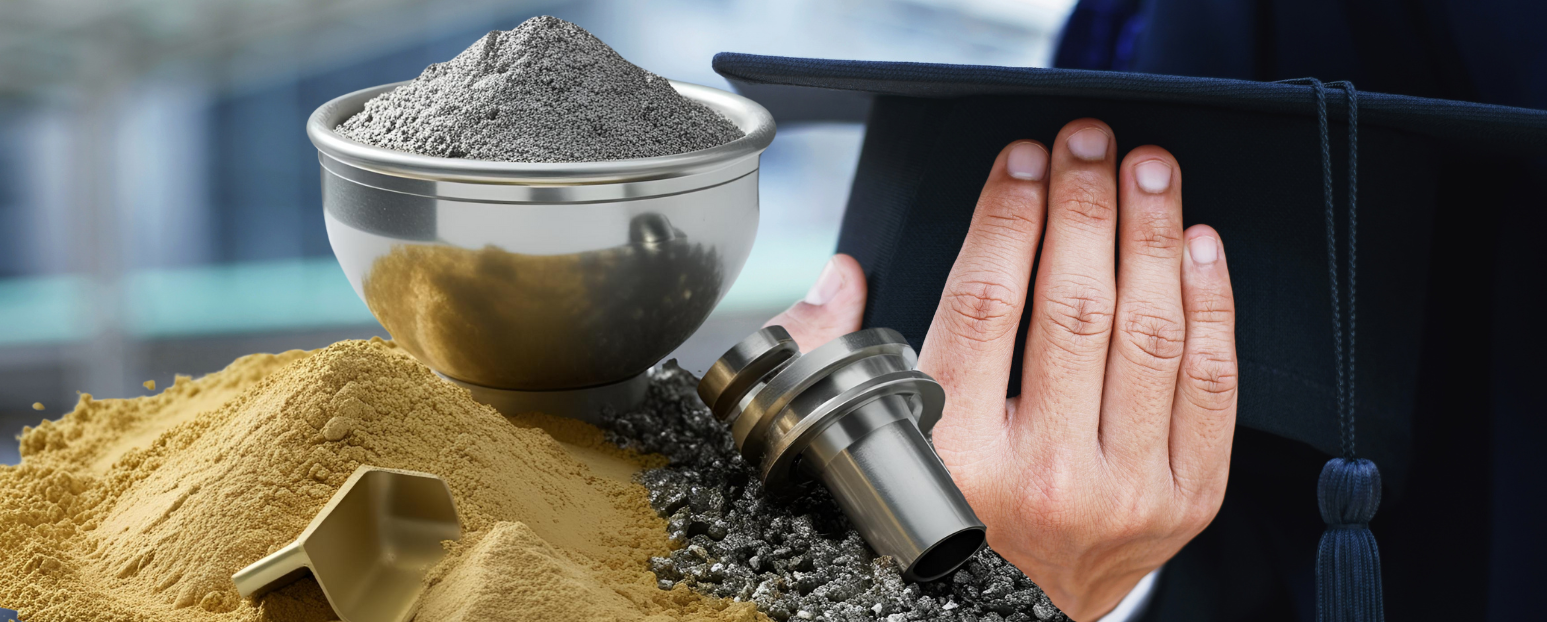
Imagine a classroom where students don’t just learn about innovation—they create it. Universities today are unlocking the power of 3D printing to transform how they teach engineering and materials science.
Additive manufacturing, especially Laser Powder Bed Fusion (LPBF), is changing the game for education.
It bridges the gap between theory and practice, giving students hands-on experience with cutting-edge technologies. According to Autodesk, the use of 3D printers in education is now the 4th largest sector, reflecting the growing adoption of this technology across various fields.
Source: Autodesk

For universities, it’s not just about staying relevant. It’s about empowering the next generation of engineers to design, prototype, and solve real-world challenges with confidence.
The best part? LPBF 3D printers are now more accessible than ever. Compact, affordable, and versatile, they’re designed to fit into university budgets and labs without compromise.
In this article, we’ll explore how universities can benefit from innovative LPBF 3D printers and why they’re a must-have for modern engineering programs. Let’s dive in.
Why Do Universities Need 3D Printing in Education?
3D printing is no longer just a tool for industry; it’s an essential part of modern education. For universities, integrating additive manufacturing means preparing students for the demands of today’s rapidly evolving job market.
Why is it so important?
- Hands-on Learning: Traditional methods only teach theory. With 3D printers, students gain practical experience by turning ideas into tangible prototypes.
- Encouraging Innovation: From complex geometries to rapid prototyping, students explore limitless possibilities in engineering and design.
- Real-World Skills: Industries like aerospace, healthcare, and automotive demand engineers who understand additive manufacturing technologies.
Here is what numbers show on using 3D printing in universities:
- 46% of engineering, mathematics, and computer science students have used a 3D printer, the highest among all majors.
- Students aged 26 to 35 were more likely to see 3D printers as valuable.
- Students who grew up outside the U.S. used 3D printers three times more than those raised in the U.S.
- Over 64% of students from low-income backgrounds didn’t know if their academic libraries had 3D printers.
By introducing LPBF printers into the curriculum, universities not only elevate their programs but also give students a competitive edge in their future careers.
Advantages for Students: Practical Learning Meets Innovation
Students need tools that bridge the gap between theory and hands-on application. Advanced 3D printing technologies offer a unique opportunity to achieve this by providing practical, customizable, and accessible solutions.
AO Metal 3D printers feature an intuitive, user-friendly interface, allowing both beginners and advanced engineering students to operate the machines confidently. This eliminates steep learning curves and ensures productive lab sessions.
- Cost-Effective Technology: Universities often face budget constraints, but these printers are designed to deliver industrial-grade capabilities at an affordable price. They reduce operational costs with energy-efficient systems, making them a sustainable long-term investment for your institution.
- Hands-On Customization: With open-parameter systems, students can adjust printing settings to explore material behavior, optimize designs, and tackle real-world engineering challenges. This flexibility is invaluable for fostering critical thinking and innovation.
- Enhanced Practical Application: From prototyping to research, students can directly apply what they learn to projects in aerospace, automotive, healthcare, and more. These experiences prepare them to excel in competitive industries after graduation.
By equipping students with cutting-edge tools, your university not only enhances education but also builds a reputation as a leader in technological innovation.
Solving the Reflective Metal Challenge: A Success Story with ORNL
Our journey to developing the first LPBF 3D printer with a blue laser for Oak Ridge National Laboratory (ORNL) began in a small workshop. The challenge was clear: ORNL needed a 3D printer capable of processing highly reflective and costly metal powders, such as copper and platinum, which traditional infrared lasers struggled to handle efficiently.
We were determined to solve this with innovative technology.
Challenge: ORNL required a printer that could efficiently process reflective metals like copper and platinum. Existing infrared laser technology was ineffective for such materials, causing significant waste.
Solution: We designed a compact printer with a blue laser, enabling better absorption and processing of these materials. The printer featured an open-parameter system, allowing researchers to experiment with different alloys, minimizing material waste.
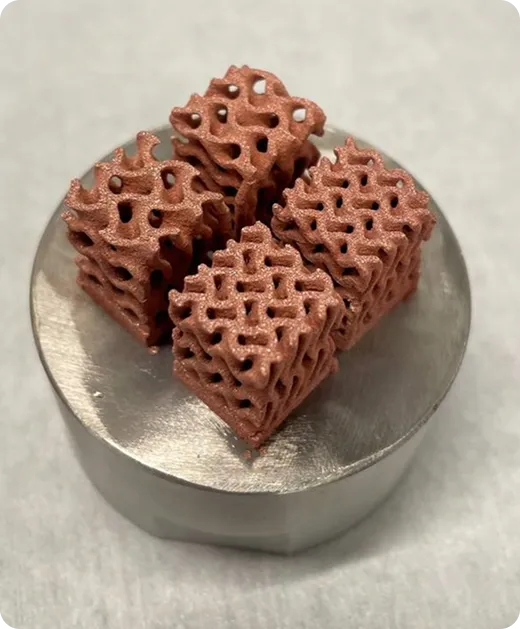
Result: The printer provided ORNL with a tool to synthesize advanced materials and alloys with high precision. This innovation led to greater material efficiency and unlocked new possibilities in research, making it a perfect fit for their existing facilities.
This successful project paved the way for scaling our product line, including the A30, A50, and A100 models, offering universities and research centers access to advanced 3D printing technology with compact, affordable designs.
To Conclude
Integrating LPBF 3D printers with blue laser technology offers universities the opportunity to prepare the next generation of engineers with cutting-edge tools.
By making these technologies accessible and affordable, AO Metal helps foster a learning environment where students can explore advanced materials, experiment with new alloys, and innovate in ways that were once out of reach.
As universities continue to equip students with the skills needed for tomorrow’s workforce, accessible and powerful 3D printing technologies will play a key role in shaping the future of engineering and material science.
Interested in learning more?
Contact us today to explore how AO Metal can support your university’s educational goals.
More from the blog
Thinking about a metal printer?
See the A30, A50 and A100, or tell us the alloy and the part.