
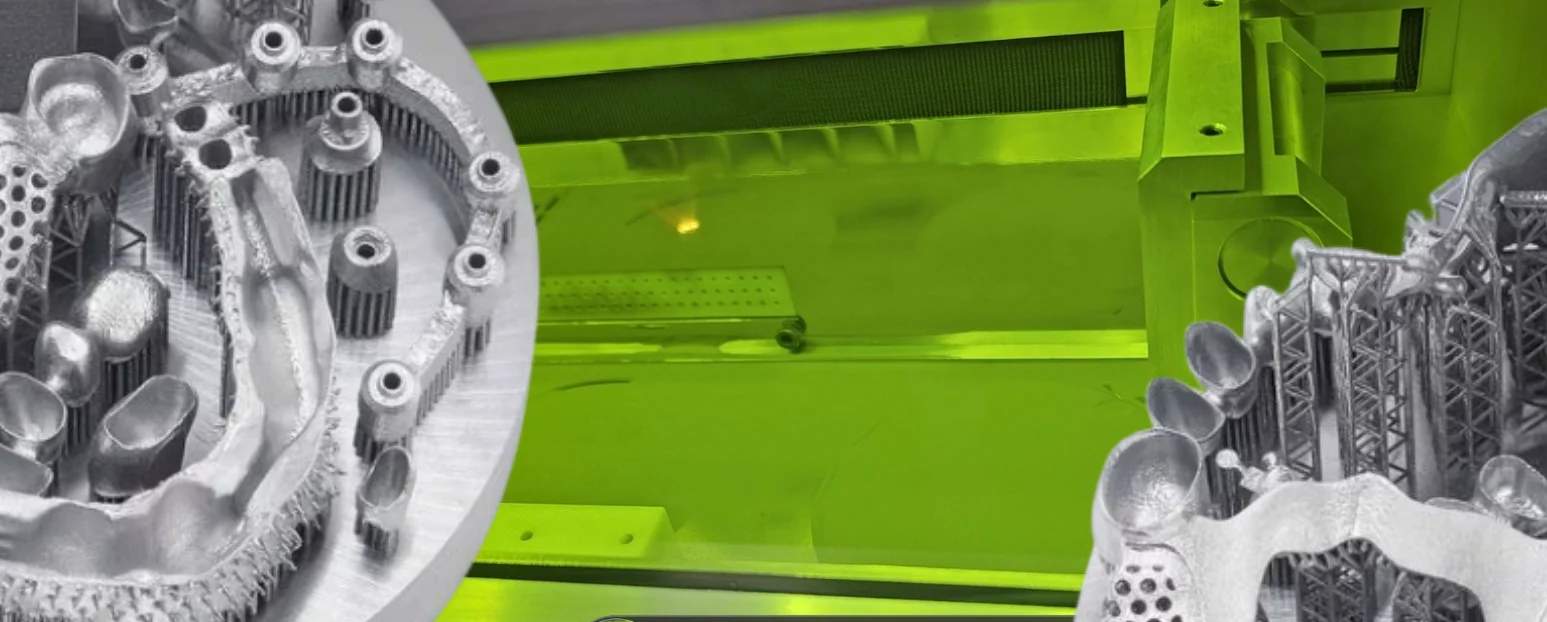
The dental industry is in the middle of a major shift. What once relied heavily on manual techniques is now being reshaped by dental 3D printing. From implants and crowns to surgical guides and orthodontic devices, 3D printing in dental care is no longer experimental; it’s becoming the standard.
At the core of this change is the ability to create stronger, more precise, and fully customized solutions using advanced additive manufacturing methods like Direct Metal Laser Sintering (DMLS). Combined with biocompatible materials such as titanium, these technologies are redefining how dental professionals restore function, aesthetics, and comfort for their patients.
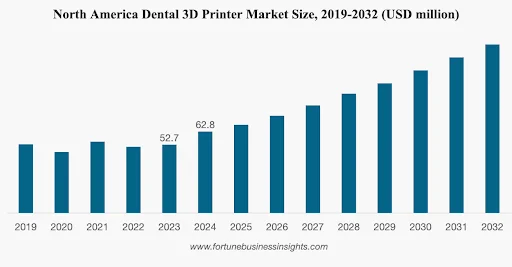
Source: Fortunebusinessinsights
This article explores the materials, processes, and advantages behind 3d printing dental implants, while highlighting real-world applications and the innovations shaping the future of 3d printing in the dental industry.
Applications Of 3D Printing In Dentistry
3D printing has moved beyond prototyping to become a practical tool in everyday clinical and laboratory workflows. Its applications are broad, covering nearly every aspect of restorative and corrective dentistry.
- 3D Printed Dental Implants: Custom titanium implants are produced with exceptional accuracy, improving stability and osseointegration compared to traditional implants.
- Crowns, Bridges, and Restorations: With 3D printing dental technology, labs and clinics can design crowns, bridges, abutments, and even full-arch restorations that match a patient’s anatomy perfectly. This improves comfort, reduces chairside adjustments, and delivers a more natural look.
- Orthodontic Devices: Aligners, retainers, and splints are easier to produce in large quantities with consistent quality. Digital workflows also allow for faster adjustments during treatment.
- Surgical Guides & Models: Highly accurate surgical guides help dentists place implants with precision, while 3D printed educational models support training and patient communication.
- Temporary & Permanent Prosthetics: Clinics can produce both short-term and long-term prosthetics, giving patients faster access to functional solutions.
Across these applications, 3D printing for dental care brings a level of customization, speed, and predictability that traditional methods cannot match.
Technologies Behind Dental 3D Printing
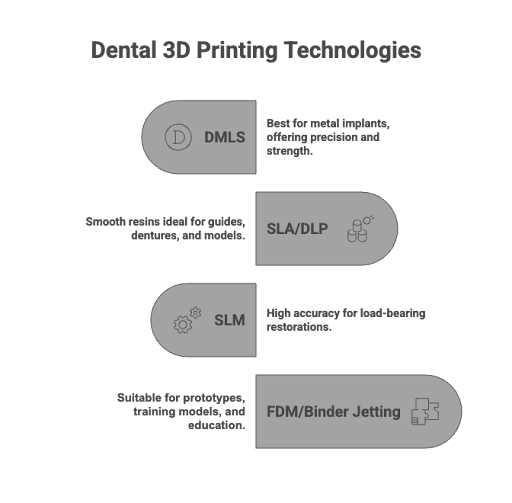
The growth of 3D printing in the dental industry is closely tied to the variety of advanced technologies now available. Each method plays a role depending on the application, materials, and level of precision required.
Direct Metal Laser Sintering (DMLS)
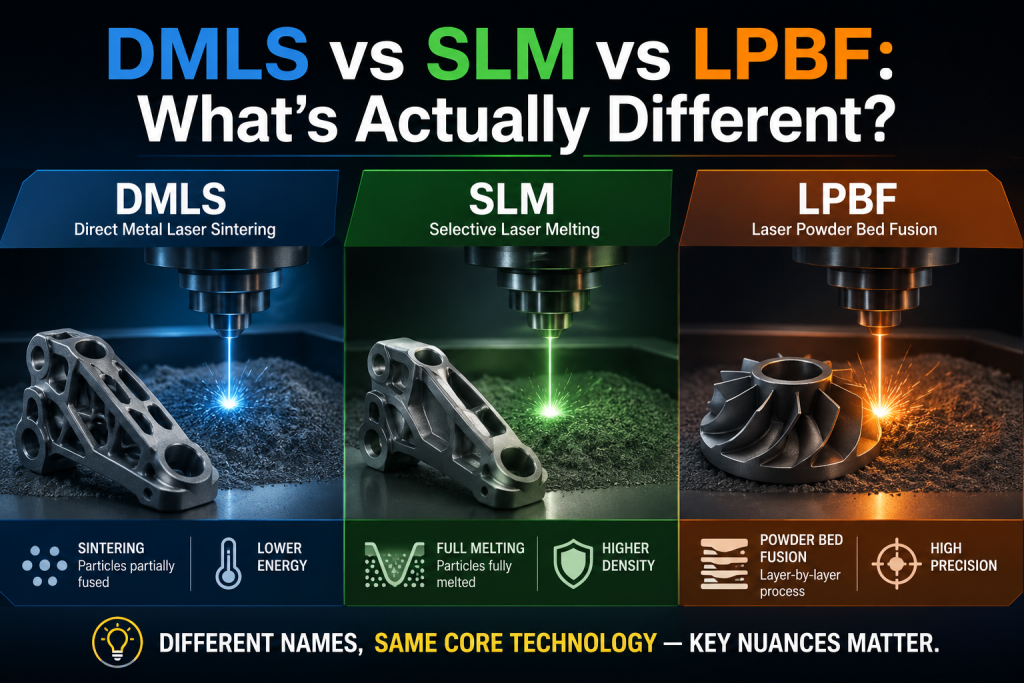
One of the most important technologies for 3D printing dental implants, DMLS uses a high-powered laser to fuse layers of titanium powder. It enables intricate designs with excellent mechanical strength, essential for long-lasting implants and abutments.
SLA & DLP (Photopolymer-Based Printing)
Common in the 3D printing dental industry, these processes use light to cure liquid resin into solid parts. They’re widely used for surgical guides, dentures, and detailed models because of their smooth surface finish and accuracy.
Selective Laser Melting (SLM)
Similar to DMLS, SLM is preferred when producing high-strength, load-bearing dental restorations such as bridges. Its ability to work with different metal powders makes it valuable for both clinics and labs.
FDM & Binder Jetting
While not typically used for final implants, these technologies are useful for prototyping, creating educational models, and producing cost-effective training tools.
Each of these approaches contributes to the versatility of dental 3D printing, enabling dental professionals to select the most suitable solution for individual patient needs.
Advanced Materials In Dental 3D Printing
Materials are central to successful dental restorations. In dental 3D printing, the choice affects strength, patient safety, and long-term performance. Titanium alloys are highly biocompatible and bond naturally with bone, making them the leading option for implants.
Other metals, such as cobalt-chromium and stainless steel, provide durable and cost-effective alternatives in specific restorative and orthodontic cases. Biocompatible resins are widely used for guides, models, and short-term restorations where speed and precision are critical.
All these materials share one trait: biocompatibility, essential for safe, reliable use in the oral environment.
Metals vs. Resins in 3D Printing Dental Applications
| Material Type | Examples | Best Uses in Dentistry | Key Benefits | Notes |
| Titanium & Titanium Alloys | Ti6Al4V, pure titanium | Implants, abutments, full-arch restorations | Lightweight, corrosion-resistant, strong bone integration | Gold standard for 3D printing dental implants |
| Cobalt-Chromium (CoCr) | CoCr alloys | Bridges, partial dentures, frameworks | High strength, wear resistance, economical | Common choice in 3D printing dental industry labs |
| Stainless Steel | Surgical-grade steel | Temporary restorations, surgical tools, orthodontic devices | Affordable, durable, easy to process | Less used for permanent implants |
| Biocompatible Resins | Photopolymer resins | Surgical guides, dentures, temporary crowns, dental models | Smooth finish, accurate, customizable | Essential in fast-turnaround 3D printing in dental workflows |
Manufacturing Workflow In Dental 3D Printing
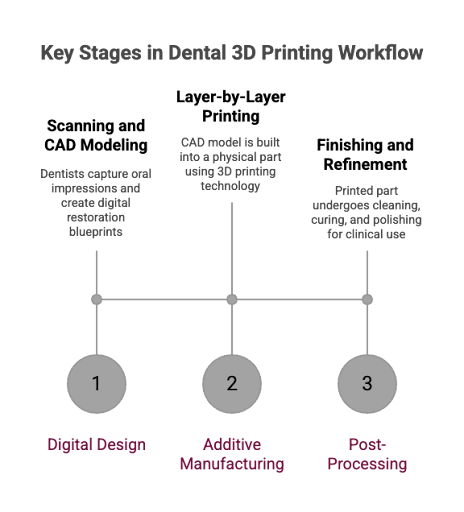
The workflow for 3D printing dental implants and other restorations begins long before the printing stage. It combines digital design, precision manufacturing, and careful post-processing to ensure every part meets clinical standards.
Why it matters
This workflow makes 3D printing in the dental industry scalable for both clinics and labs. The result is faster production, highly accurate restorations, and minimal material waste—benefits that traditional manufacturing can’t match.
Advantages Over Traditional Methods
The adoption of dental 3D printing brings clear advantages compared to conventional manufacturing in dentistry.
- Precision & Customization: Every restoration can be tailored to the patient’s unique anatomy, improving fit, comfort, and long-term success.
- Durability: Internal reinforcement and advanced materials make restorations stronger and more reliable than those produced with manual techniques.
- Speed & Cost-Effectiveness: Digital workflows cut down on manual labor and multiple production steps, delivering faster results at lower costs.
- Less Invasive Procedures: With accurate surgical guides and well-fitted implants, procedures are gentler, healing times are reduced, and patient discomfort is minimized.
- Improved Aesthetics: Restorations produced with 3D printing dental technologies offer a more natural look, blending seamlessly with existing teeth.
These advantages are why more clinics and labs are integrating 3D printing for dental care into their daily operations; it improves patient outcomes while also strengthening business efficiency.
AO Metal Printers In The Dental Industry
When it comes to producing reliable, high-precision dental implants, AO Metal A30, A50, and A100 series printers are designed to meet the needs of labs, universities, and clinics. Each system combines accuracy, efficiency, and cost-effectiveness, while remaining compact and affordable.
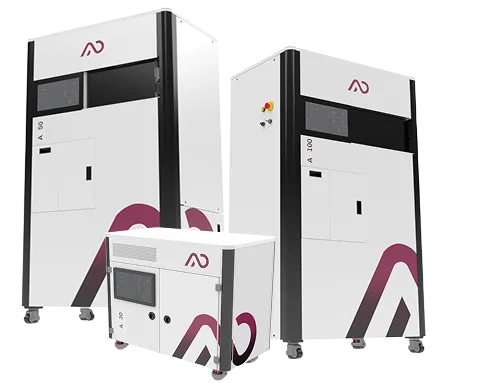
Key Features:
- Open-Parameter Systems – Full control of lasers, scan strategies, and thermal profiles for optimized dental applications.
- Blue Laser Option (445 nm) – Available on A50 and A100, enabling efficient processing of reflective metals like gold and copper, widely used in dental and jewelry applications.
- High-Precision Optics & Compact Design – Industrial-grade quality in a lab-friendly footprint.
- Quick Powder Change – 1–3 hours, depending on the model, for fast material switching.
Build Plate Heating (up to 900 °C on A100) – Critical for processing hard-to-print alloys.
Material Compatibility
AO Metal printers support titanium, cobalt-chromium, stainless steel, and other dental-grade alloys, enabling the production of implants, abutments, crowns, and bridges with excellent accuracy.
Applications in Dentistry
- A30: Ideal for small crowns, prototypes, and educational models.
- A50: Perfect for crowns, bridges, and R&D of dental alloys.
- A100: Best suited for larger restorations, abutments, and multi-unit dental frameworks.
With AO Metal, clinics and labs can achieve consistent quality, shorter turnaround times, and lower operational costs.
Shop AO Metal Dental Printers with Flexible Financing
Challenges And Considerations
While dental 3D printing has clear advantages, successful adoption requires addressing a few important challenges.
- Regulatory Standards: Dental implants and devices must comply with strict certifications, such as FDA or CE approval, to ensure patient safety and clinical reliability.
- Material Validation: Not all materials perform the same in the oral environment. Long-term studies and proper validation are essential before they can be trusted for permanent restorations.
- Training Requirements: Dentists, technicians, and lab staff need specialized training to handle digital workflows, printers, and post-processing correctly.
- Workflow Integration: Clinics and labs must adapt their existing processes to integrate digital scanning, CAD modeling, and additive manufacturing without disrupting day-to-day operations.
By understanding these factors, dental professionals can implement 3D printing in dental industry practices with confidence, ensuring safe, effective, and consistent results for patients.
The Future Of Dental 3D Printing
The future of 3D printing in the dental industry points to smarter materials, faster workflows, and more personalized care. New options like ceramic composites and bioresorbables are emerging, while AI-driven tools are making implant design more precise. Chairside systems are also on the rise, enabling same-day customized restorations.
The combination of advanced processes such as DMLS with biocompatible materials like titanium is setting new standards: stronger implants, natural-looking restorations, and more accessible treatments.
For clinics, labs, and researchers, adopting AO Metal printers today means preparing for a future where dental care is faster, safer, and fully patient-specific.
Discover Our Selection Today
Most asked questions
Frequently asked questions
How long does it take to move from design to a finished dental part using AO Metal workflows?
Turnaround depends on complexity and material. Resin parts like surgical guides can be ready in hours, while titanium implants produced with DMLS usually take one to two days, including post-processing.
Are the materials compatible with standard CAD and scanning tools used in U.S. clinics?
Yes. AO Metal printers integrate easily with popular intraoral scanners and CAD systems, so workflows fit into existing setups.
What sort of certifications do printed dental parts and materials hold?
All materials and parts meet U.S. and international standards, including FDA and CE certification, ensuring they are safe for clinical use.
What level of staff training is required to implement 3D printing in a dental lab or clinic?
Basic training can be completed in one to two days. Teams learn operation, material handling, and post-processing, with ongoing support from AO Metal.
What are the financing options available for investing in printers or dental-grade materials?
Flexible leasing and financing options are available, with low upfront costs and bundled packages for hardware and materials to help clinics and labs scale affordably.

More from the blog
Thinking about a metal printer?
See the A30, A50 and A100, or tell us the alloy and the part.