
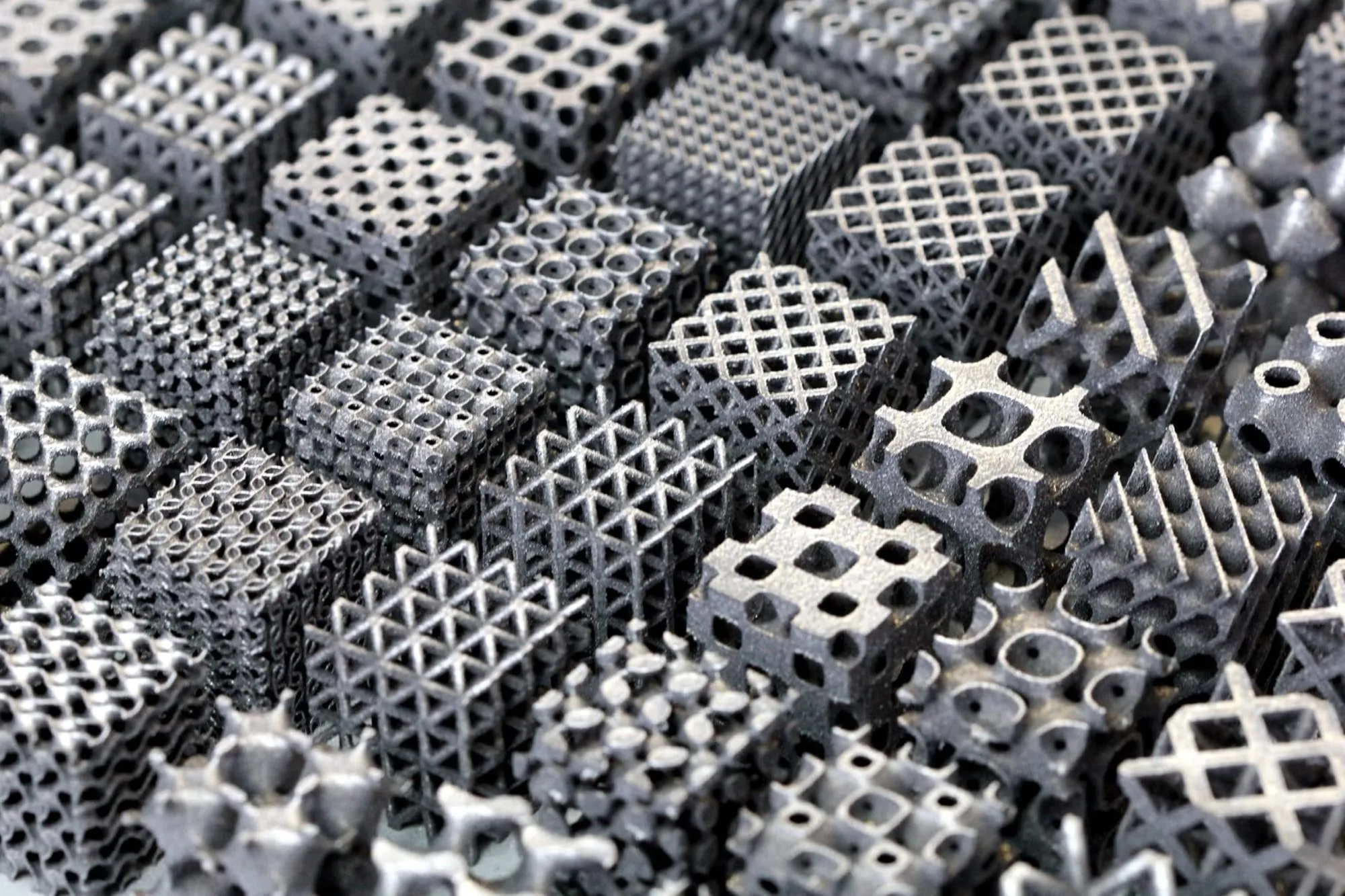
Metal 3D printing isn’t just for prototyping anymore. It’s now a reliable method for producing strong, functional parts, especially with LPBF, or Laser Powder Bed Fusion.
LPBF is one of the most widely used metal additive manufacturing techniques. It builds high-quality parts directly from powder, with excellent control over geometry and material properties.
But what is LPBF, really? How does it work? And why are more engineers, researchers, and manufacturers choosing it?
In this article, we’ll walk through what LPBF additive manufacturing is, how it compares to other options, and why it’s gaining traction across industries.
What Is LPBF? A Practical Look At Laser Powder Bed Fusion
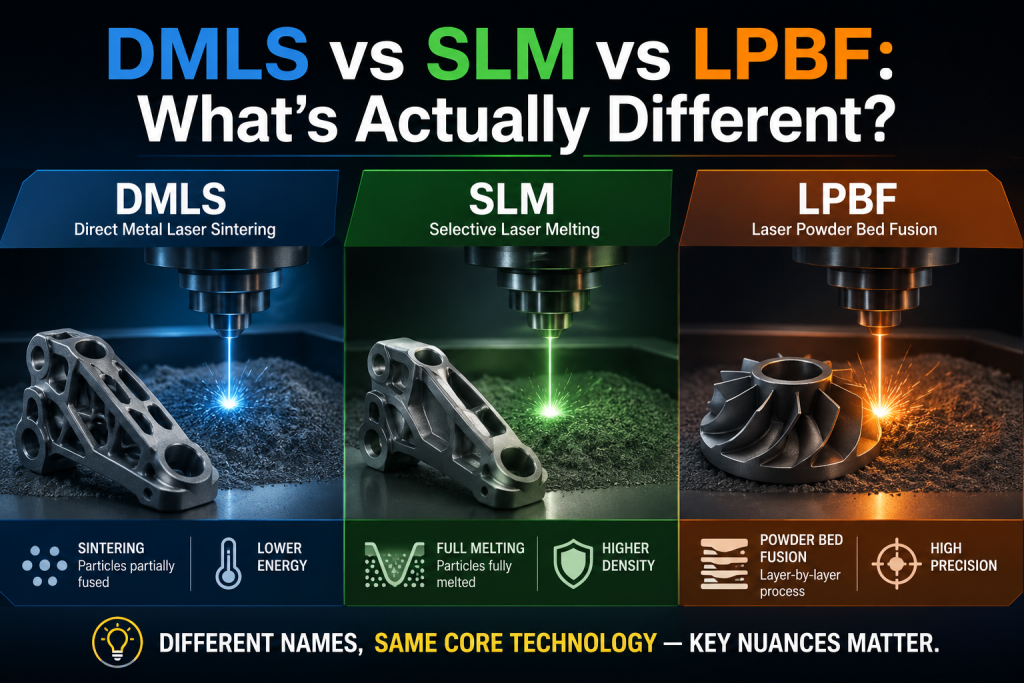
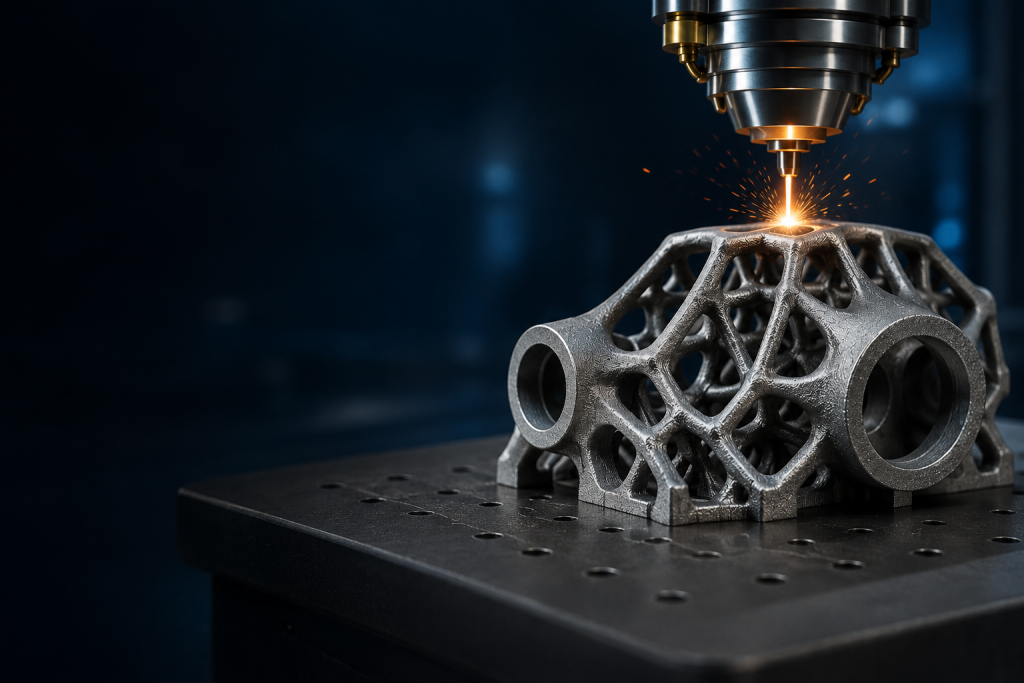
LPBF (Laser Powder Bed Fusion) is a type of metal 3D printing that uses a high-powered laser to melt and fuse metal powder, layer by layer. The process happens in a controlled environment, usually filled with argon or nitrogen gas to prevent oxidation.

Source: ResearchGate
Each layer is as thin as 20–100 microns, allowing for precise control over part geometry, internal channels, and fine features. LPBF printers follow a 3D CAD model to build parts directly, eliminating the need for tooling or casting.

Source: Materials Science and Engineering: An Introduction
Because of its precision and material efficiency, LPBF additive manufacturing is widely used in industries like aerospace, automotive, medical, and R&D.
Here’s what makes LPBF stand out:
- High part density (often above 99%)
- Complex geometries with tight tolerances
- Ability to process a wide range of metals, including stainless steel, titanium, Inconel, and tool steels
It’s no surprise that when people ask “what is LPBF,” it often leads to deeper conversations about how to get started with a reliable LPBF printer and how to make sure it’s the right fit for the job.
How LPBF Additive Manufacturing Works – Step By Step
Understanding how LPBF additive manufacturing works helps you decide whether it fits your lab or production line.
Here’s a simplified breakdown:
- Prepare the 3D Model: Start with a CAD file of your part. The file is sliced into thin layers and loaded into the LPBF printer.
- Distribute the Powder: A layer of metal powder is spread across the build platform. Powder quality, size, and flowability directly affect your part quality.
- Laser Selectively Melts the Powder: A laser follows the layer’s cross-section, melting the powder in precise spots. The metal fuses and solidifies rapidly, forming a dense layer.
- Lower the Build Plate: Once a layer is done, the build plate moves down slightly to prepare for the next.
- Repeat the Process: The printer repeats the steps—layering, melting, lowering—until the full part is built.
- Post-Processing: After printing, the part is removed and may undergo stress relief, machining, or surface finishing. This depends on your application’s requirements.
The entire LPBF process is digital, which reduces human error and enables repeatable results. But to achieve those results consistently, the printer’s design, material compatibility, and environmental control matter a lot.
- R&D Bundle: ATO Lab Atomizer, Camsizer X2 and AO Metal A50
- AO Metal A30 — Benchtop LPBF Metal 3D Printer
- A50
- A100
- A-Powder Ti-6Al-4V Grade 23 ELI — Titanium Powder for AO Metal Printers
- A-Powder Ti-6Al-4V Grade 5 — Titanium Powder for AO Metal Printers
- A-Powder 316L — Stainless Steel Powder for AO Metal Printers
- A-Powder 17-4PH — Precipitation-Hardening Steel Powder for AO Metal Printers
- A-Powder Inconel 718 — Nickel Superalloy Powder for AO Metal Printers
When Does LPBF Make Sense? Practical Use Cases
Not every project needs an LPBF printer, but it’s an incredibly efficient option for the right tasks. Here’s when LPBF additive manufacturing is a smart fit:
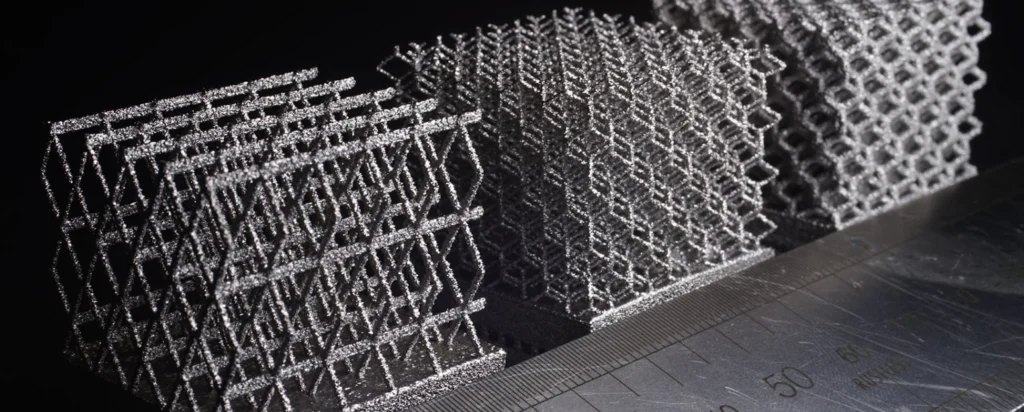
- When you need small, complex metal parts: LPBF is ideal for intricate geometries that are hard to machine, like lattice structures, internal channels, or lightweight designs.
- When surface quality matters: LPBF printers can produce parts with excellent resolution and finish, reducing the need for extensive post-processing.
- When material efficiency is a priority: Unlike subtractive manufacturing, LPBF uses only the powder it needs. This minimizes waste, which is important when working with expensive alloys.
- When fast iteration is important: Research labs and product developers often use LPBF to prototype and refine parts without waiting on molds or tooling.
- When you’re working with advanced or reactive metals: LPBF supports a wide range of metals such as stainless steel, titanium alloys, Inconel, copper, and more. Some LPBF printers (like those with blue laser options) even handle reflective and hard-to-process powders.
This process doesn’t replace all manufacturing methods, but when used strategically, LPBF gives you more control over material behavior, design freedom, and turnaround times.
What Makes A Good LPBF Printer? Key Features To Look For
If you’re considering bringing LPBF additive manufacturing in-house, not all systems are created equal. A good LPBF printer should be more than just functional—it should be practical, reliable, and tailored to your needs.
Here’s what to focus on:
| Feature | What to Look For |
| Material Compatibility | Supports a wide range of powders like stainless steel, titanium, Inconel, copper, CoCr. Open-parameter systems are ideal for R&D. |
| Build Volume | Sized to match your actual part dimensions. Compact systems are often better for labs and small parts. |
| Laser Power and Type | Fiber lasers in the 200–500W range work for most metals. Optional blue lasers (445 nm) are better for reflective materials. |
| Powder Changeover Speed | Look for systems that allow powder switching in 1–3 hours to support flexibility in multi-material work. |
| Thermal and Gas Management | Stable temperature control with optional heated platforms (up to 900°C). Efficient argon use (<2 L/min). |
| Ease of Operation & Maintenance | Designed for simple calibration, cleaning, and servicing. Reduces downtime and training needs. |
LPBF printers should work with you, not slow you down with endless setup, frequent repairs, or software limits.
Read Related Articles
Industry Applications: Where LPBF Additive Manufacturing Makes The Most Impact
LPBF additive manufacturing isn’t just for prototypes. It’s actively used in demanding industries where performance and precision matter most. Here’s where it stands out:
- Aerospace: Lightweight, complex parts like brackets, turbine blades, and heat exchangers are commonly printed with LPBF. The ability to reduce part count and maintain strength is critical for flight components.
- Medical: Patient-specific implants, surgical tools, and orthopedic parts benefit from the high resolution and biocompatible materials LPBF can work with, such as titanium and CoCr alloys.
- Tooling and Molds: LPBF helps create conformal cooling channels in injection molds, reducing cycle times and improving tool life. It’s especially useful for high-strength tool steels and maraging steels.
- Automotive: From motorsports to EV innovation, LPBF enables fast iteration on lightweight structural parts and thermal systems. It’s also used for short-run production and legacy part replacement.
- Energy and Industrial: LPBF printers are used to manufacture high-temperature parts for turbines, reactors, and specialized industrial components, often from Inconel or oxide dispersion-strengthened (ODS) steels.
Across all these industries, LPBF additive manufacturing offers something conventional methods don’t: the ability to produce geometries that were previously impossible or too costly to machine.
AO Metal: LPBF Solutions Built For Real-World Work
Not every team needs a massive industrial printer. Many just need a compact, reliable LPBF system that’s affordable and easy to use, without compromising quality.
That’s where AO Metal comes in.
Our lineup includes three LPBF printers built specifically for research labs, small-scale production teams, educators, and material developers:
| Model | Build Volume | Best For | Highlights |
| A30 | Ø30×60 mm | R&D labs, universities | Compact footprint, 1-hour powder changes, low operating cost |
| A50 | Ø50×100 mm | Material testing, prototyping | Optional blue laser, low argon use, heated platform up to 900°C |
| A100 | Ø100×100 mm | Advanced R&D, production | Dual-laser support, sub-3-hour powder swaps, handles tough alloys |
All three systems use LPBF additive manufacturing to produce dense, accurate metal parts from materials like stainless steel, titanium, Inconel, copper, and more. They’re designed to give you more control—whether you’re testing materials, developing products, or scaling up a lab.
We also offer open-parameter setups for users working on custom alloy development or process tuning.
👉 Looking to bring LPBF printing in-house? Explore our printers or get in touch for a quote.
Common Challenges With LPBF (And How To Manage Them)
Laser Powder Bed Fusion is powerful—but it’s not plug-and-play. Like any advanced process, LPBF additive manufacturing comes with technical challenges. Here’s what you might face—and how to work through it.
1. Metallurgical Defects
Balling, porosity, keyholing, and cracking often stem from poor parameter tuning. Choosing the right LPBF printer (with a stable melt pool, controlled atmosphere, and precise scanning) minimizes these risks.
2. Powder Quality and Handling
LPBF printers rely on fine metal powders. If powders have poor flowability, are oxidized, or recycled too many times, it affects part quality. Work with reliable suppliers and choose systems that support quick, clean powder changeovers.
3. Residual Stresses
Because of rapid heating and cooling, LPBF parts often carry internal stress. That can lead to warping or cracking. Solutions include preheating, post-processing (like stress relief heat treatments), and building orientation adjustments.
4. Surface Finish
As-built LPBF parts may have rough surfaces due to partially melted particles or scan tracks. You’ll often need machining or polishing, especially for high-tolerance applications like medical tools or aerospace brackets.
5. Limited Part Size
Most LPBF printers have compact build volumes. That’s great for small, high-precision parts, but it limits large-scale production. For bigger parts, hybrid approaches (or multi-part assemblies) might be more efficient.
6. Operational Know-How
Even with automation, LPBF takes experience. Teams need training to set build parameters, maintain the printer, and interpret part quality data. Open-parameter printers give you more control—but also more responsibility.
LPBF Additive Manufacturing: A Smart Step Forward
Laser Powder Bed Fusion isn’t hype—it’s a practical solution for teams who need precision, speed, and control when working with metal parts. Whether you’re building prototypes, testing alloys, or producing short-run components, LPBF additive manufacturing gives you the ability to create what you need without traditional constraints.
AO Metal offers compact, affordable LPBF printers that bring this capability into your lab or workspace. Each model is designed to support real research and production needs, with quick powder changes, high-quality results, and smart configurations for both common and complex materials.
Interested in seeing how LPBF fits into your work?
We’re happy to walk you through the options.
👉 Explore AO Metal Printers or Contact Us to get started.
FAQ
Can I use my own metal powders with an LPBF printer, or am I limited to a specific supplier?
It depends on the printer. Many open-parameter LPBF systems—like those offered by AO Metal—allow you to use third-party or self-atomized powders. This is ideal for research labs working with custom or experimental alloys.
How do I evaluate the long-term cost of owning an LPBF printer?
Beyond the purchase price, factor in operating costs like inert gas usage, energy consumption, maintenance, powder waste, and post-processing needs. Compact LPBF printers designed for lab use often keep these costs low.
What certifications or safety protocols are required to operate an LPBF system in a lab or university setting?
Requirements vary by region, but you’ll typically need proper ventilation, fire safety plans, personal protective equipment (PPE), and trained personnel. Some systems are designed specifically to meet lab compliance standards with closed powder handling and inert gas control.
Can LPBF be used for batch production, or is it just for prototyping?
Yes, many small-to-medium parts can be produced in batches using LPBF, especially when consistent repeatability and material performance are required. It’s ideal for bridge manufacturing and low-volume production of complex parts.
How does LPBF differ from other types of metal 3D printing like DED or binder jetting?
Each process serves a different purpose. LPBF is ideal for fine detail, tight tolerances, and mechanical performance. DED is used for larger parts and repairs. Binder jetting is faster and good for low-cost bulk production but often requires sintering and more post-processing.
What support does AO Metal offer after purchasing a machine?
AO Metal provides personalized onboarding, technical support, maintenance guidance, and help integrating the printer into your workflow. This ensures teams with limited additive experience can still use LPBF effectively.
How can I tell if my application needs an LPBF printer or if outsourcing is a better choice?
Ask yourself how often you’ll need metal parts, how fast you need them, and how important design control is. If you frequently prototype, test new alloys, or want control over materials, owning a system makes sense. Otherwise, outsourcing may be more cost-effective for occasional use.
More from the blog
Thinking about a metal printer?
See the A30, A50 and A100, or tell us the alloy and the part.