
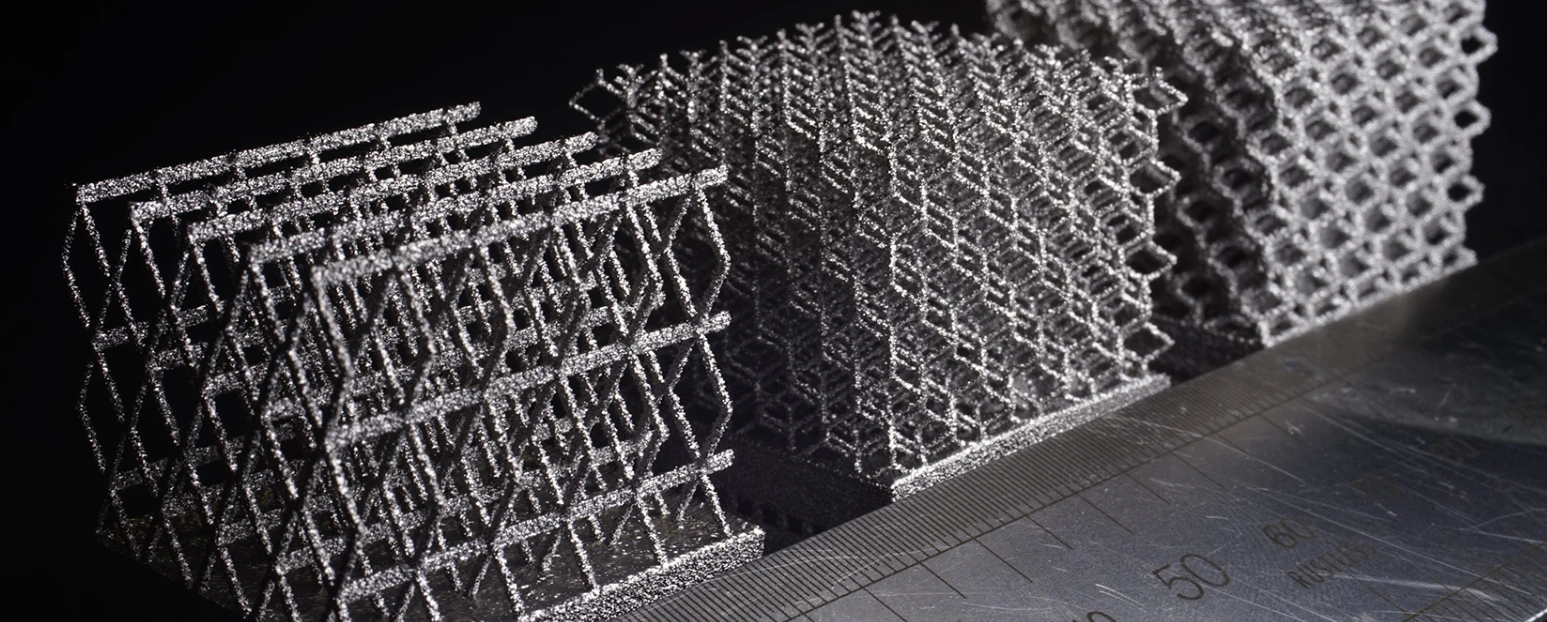
Metal 3D printing is changing how we make everything from rocket parts to custom jewelry. But many still ask: Can you 3D print metal affordably, and how does it work?
The short answer? Yes. Today, there are more than 10 ways to print with metal. Some cost less than $1,000, and others are built for industrial use. The options are growing fast.
This article explains how metal 3D printing works, the most practical methods, real costs, and what materials you can use. You’ll also find examples from aerospace, healthcare, and jewelry manufacturing—plus insights on what’s next for this technology.
If you’re running a lab, startup, or production floor, this guide will help you determine which metal 3D printing approach is most appropriate.
AO Metal helps teams like yours make confident decisions with compact, cost-effective printers built for research, education, and production. To see how our tools can fit into your workflow, contact our team or explore our product range today.
How Metal 3D Printing Works (The Science Simplified)?
So, how do you 3D print metal?
At the core, it’s a simple process: a metal feedstock—usually powder or wire—is fused layer by layer using a heat source like a laser or electron beam. The result is a solid metal part, built from the ground up.

Source: HP
Several methods exist, but all involve turning raw material into a finished shape without molds or machining.
Main Metal 3D Printing Technologies
Let’s break down a few standard terms you’ll see:
| Technology | Also Called | How It Works | Best Use |
| SLM (Selective Laser Melting) | LPBF, DMLS | Laser fully melts metal powder layer-by-layer | Aerospace, medical, and high-precision parts |
| Binder Jetting | — | A liquid binder “glues” powder before it’s sintered | Mass production, lower cost |
| DED (Directed Energy Deposition) | WAAM, LENS | Powder or wire is melted directly as it’s deposited | Large repairs, industrial tooling |
| Metal FDM | Filament-based | Metal powder in a plastic binder is printed, then sintered | Education, low-cost prototyping |
If you’re wondering, “Can 3D printers print metal?” — the answer is yes, and in more ways than ever before. You’ll find everything from lab-scale desktop printers to large-format systems used in jet engine production.
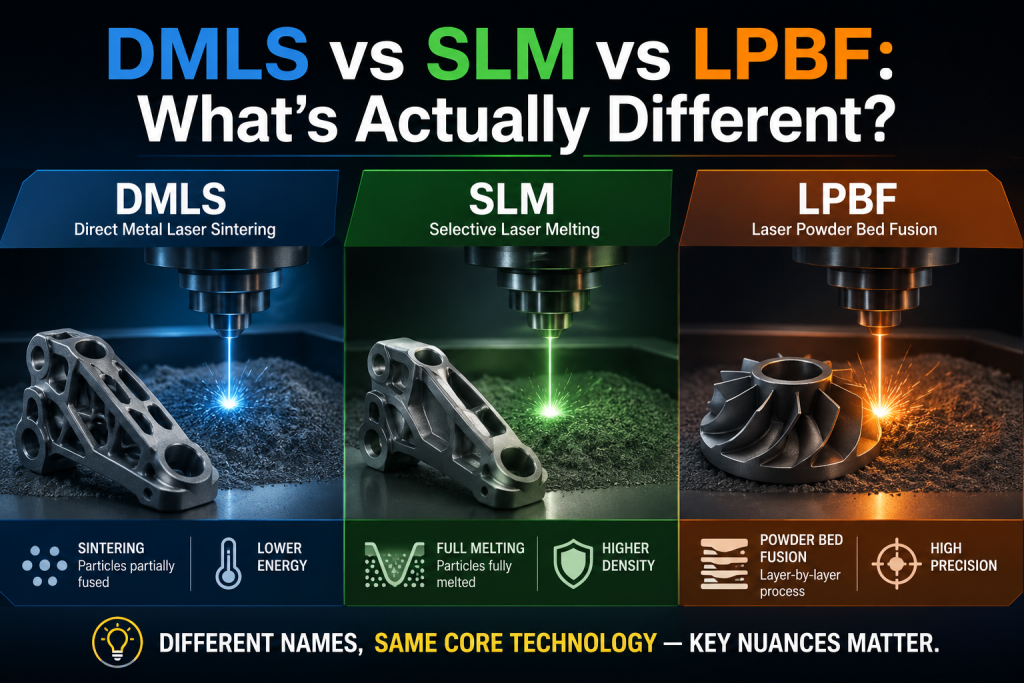
What’s the Difference Between SLM, DMLS, and LPBF?
These terms are often used interchangeably. Here’s a quick breakdown:
- SLM (Selective Laser Melting): Fully melts the metal powder.
- DMLS (Direct Metal Laser Sintering): Fuses powder without completely melting it (mostly used for alloys).
- LPBF (Laser Powder Bed Fusion): A broader category that includes both.
They all rely on lasers, an inert gas chamber (often argon), and a fine metal powder bed. It’s a precise, reliable way to build strong, detailed parts.
Wondering how to 3D print metal in your own lab or workspace? Your chosen method depends on your budget, required strength, and part complexity. In the next section, we’ll compare the most practical options.
Want help choosing the right metal printing method for your team? Contact us at AO Metal—we’re happy to help.
5 Most Practical Ways To 3D Print Metal (With Comparisons)
- Not all metal 3D printing methods are created equal. Some are fast and low-cost, while others are built for high-performance industries like aerospace and healthcare.If you’re asking, “Can you 3D print metal cheaply?” or “Which method suits my team’s needs?” — this side-by-side comparison will help you decide.Quick Comparison of Metal 3D Printing MethodsMethodCost ($–$$$$)Best ForLimitationsMetal FDM$Education, prototypingLower part strength, post-processing requiredLPBF (SLM/DMLS)$$$$Aerospace, implants, R&DExpensive machines, powder handlingBinder Jetting$$$Batch production, toolingRequires sintering and support removalWAAM (DED)$$Large metal parts, repairsSurface finish, lower resolutionCold Spray$$$Coatings, defense, repairLimited materials, larger footprintEach method answers a different version of the question: “Can a 3D printer print metal in a way that fits our budget and goals?”What to Consider When Choosing a MethodCost: FDM setups can start under $1K. LPBF systems can exceed $500K.
Strength: LPBF and DED produce fully dense, strong parts.
Resolution: FDM and WAAM have lower precision; LPBF leads in fine detail.
Use Case: Prototyping, production, research, or repair?
If you’re wondering how to 3D print metal with limited resources, Metal FDM or binder jetting could be a starting point. LPBF or DED will offer better results for performance parts or regulated industries.
Metals You Can (and Can’t) 3D PrintWhen it comes to materials, metal 3D printing gives you more options than most people expect. But not every metal is easy—or safe—to work with.If you’re asking, “Can you 3D print with metal like titanium or copper?” or even gold, here’s what you need to know.Commonly Printable MetalsMetalWhy It’s UsedNotesTitanium (Ti6Al4V)Strong, biocompatiblePopular in aerospace and medicalAluminum (AlSi10Mg)Lightweight, corrosion-resistantGreat for housing, heat exchangersStainless Steel (316L)Tough, widely availableGood for tools, parts, and prototypesInconel (IN718)Extreme heat and corrosion resistanceUsed in turbines, exhaust systemsCopperHigh thermal and electrical conductivityIdeal for heat sinks, inductorsAll of these metals can be used with LPBF (Laser Powder Bed Fusion) systems like those offered by AO Metal. They support high-performance research, product development, and short-run production.Difficult or Restricted MetalsMetalWhy It’s ChallengingMagnesiumHighly flammable, especially as powderTungstenVery high melting pointZincCan vaporize during printingThese materials are either unsafe to print without special equipment or not commonly supported by standard printers.Can you 3D print in metal for jewelry applications? Yes. Precious metals like gold, silver, and platinum can be printed using LPBF, but are more often cast using 3D-printed wax molds due to cost.Whether you’re designing heat exchangers or custom rings, it’s essential to choose the right material for your use case. AO Metal printers are compatible with multiple alloys—including titanium, copper, and stainless steel—so you can test, iterate, and deliver results without switching platforms.Have a specific metal in mind? Ask us if your material is supported or request a sample part for review.
Cost Breakdown: Is Metal 3D Printing Affordable?
Many teams hesitate to adopt metal 3D printing because of one thing: cost. But the numbers aren’t as high as you might think, especially when you consider long-term use, prototyping speed, and design freedom.
How Much Does a Metal 3D Printer Cost?
| Printer Type | Price Range | Example Use |
| Desktop (FDM) | $1K – $10K | Entry-level prototyping, education |
| Compact LPBF | $49K – $100K | R&D, jewelry, engineering labs |
| Industrial LPBF | $100K – $1M+ | Aerospace, medical, production runs |
If you’ve asked yourself, “Can you 3D print metal without spending six figures?” — the answer is yes. AO Metal’s compact LPBF systems are built to bring industrial-quality results to smaller labs, startups, and production teams, starting at $59,000.
What About Material Costs?
| Material Type | Price per kg (approx.) |
| Stainless Steel | $100 – $250 |
| Titanium | $300 – $500 |
| Aluminum | $80 – $200 |
| Copper | $200 – $400 |
| Metal Filament | $150 – $200 |
Powders for LPBF are more expensive, but they offer better quality and higher performance. Wire is often cheaper but used with DED or WAAM systems.
Comparing Costs: Traditional vs. 3D Printing
Let’s say you’re producing 100 titanium brackets.
| Production Method | Total Cost Estimate | Notes |
| CNC Machining | $8,000 – $10,000 | High waste, complex tooling |
| LPBF Printing | $4,000 – $6,000 | Less waste, no molds, faster lead time |
Wondering how to 3D print metal and make it worth the investment? Start by calculating your break-even point. For many teams, even a short production run pays off, especially for complex or custom parts.
Choosing The Right Metal 3D Printer: AO Metal’s Product Line
Suppose you’re serious about metal 3D printing but need a compact, cost-efficient system that doesn’t sacrifice quality. In that case, AO Metal offers three models built to meet the demands of research labs, R&D teams, and educational institutions.
Whether you need high-power laser precision, fast material changeovers, or a compact unit that fits in your workspace, each AO Metal printer is made in the U.S.A. and designed to perform in real-world environments.
Here’s a closer look.
Choosing A DMLS Printer That Fits — What To Know Before You Buy
DMLS printers are powerful tools, but many are designed for large-scale operations with big budgets. At AO Metal, we’ve taken a different approach—creating compact, lab-ready machines with the same precision and material flexibility, starting at $59,000.
Whether you’re printing test samples, jewelry molds, or real production parts, our printers are made to fit your work, not overwhelm it.
B
For compact labs, universities, and early-stage R&D
Build Volume: Ø30 x 60 mm (Ø1.18 x 2.36 in)
- Small footprint fits through standard doors—no special installation needed
- Energy-efficient design (2.5 kW) keeps operating costs low
- Switch metal powders in under an hour—ideal for multi-material experimentation
- Produces smooth surfaces with minimal post-processing
- User-friendly system built for learning environments or collaborative projects
Use Case: Best fit for teaching labs, small-scale prototyping, jewelry design, or institutions testing AM in early-stage research.
All AO Metal printers support popular materials, including 316L, Ti6Al4V, IN718, AlSi10Mg, and pure copper, giving you the flexibility to meet project requirements without changing platforms.
Not sure which model fits your needs? Talk to us and we’ll walk you through a side-by-side comparison based on your workflow, materials, and budget.
For precision R&D and short-run production
Build Volume: Ø50 x 100 mm (Ø1.97 x 3.94 in)
- Blue laser (445 nm) boosts melting efficiency and part detail
- Compact size fits research environments without sacrificing output quality
- Supports the consolidation of complex components to reduce failure points
- Reliable for small-batch manufacturing, iterative testing, and rapid prototyping
- Compatible with a range of metals from lightweight to high-strength alloys
Use Case: Perfect for automotive labs, material test centers, and universities focused on advanced design testing and functional prototypes.
For industrial R&D, production, and hard-to-print materials
Build Volume: Ø100 x 100 mm (Ø3.94 x 3.94 in)
- Features blue laser capability through the scanhead for high-reflective alloys like copper and gold
- Supports quick material changeovers (under 3 hours)
- Optional high-temperature platform (up to 900°C) for metals like tungsten, molybdenum, and tantalum
- Fiber laser: 300W standard, 500W/1000W optional
- Ideal for teams working with demanding materials or advanced alloy development
Use Case: Ideal for aerospace R&D teams, advanced labs, and energy-sector applications that require flexibility and control.
The Future Of Metal 3D Printing
Metal 3D printing is no longer a futuristic concept. It’s becoming a standard tool for research, production, and innovation.
In 2023, the global market for printed metal objects generated $170.8 million in 2023. By 2030, it’s expected to grow to over $824 million.
That growth reflects more than just market demand. It shows how quickly this technology is being adopted by:
- Research labs looking to test new alloys
- Manufacturers replacing traditional tooling
- Universities training students on real-world equipment
- Startups iterating quickly without large-scale investment
As machines become more compact and material options expand, metal additive manufacturing will continue to reach more teams and more use cases.
Final Thoughts: Is Metal 3D Printing Right For You?
Metal 3D printing is no longer limited to large corporations or million-dollar labs. Today, it’s a practical, flexible solution for startups, universities, and research teams that need precision, speed, and material variety—all without breaking the budget.
We’ve answered questions like:
- Can you 3D print metal at home or in a lab?
- Can a 3D printer print metal strong enough for real use?
- How do you 3D print metal affordably and safely?
And we’ve shown how compact, high-performance tools like AO Metal printers can help you produce real parts on your terms.
Whether you’re developing a new material, prototyping a custom part, or integrating additive manufacturing into your curriculum, AO Metal is built to support your work from day one. No wasted space. No unnecessary features. Just reliable tools that help you move faster and smarter.
Ready to compare models or get a quote? Reach out to our team to find the right fit for your lab, budget, and goals.
Most asked questions
Frequently asked questions
Do 3D printers print metal with the same strength as forged parts?
Not always. Metal 3D printed parts can match or even exceed the strength of forged components—but that depends on the printing method, material used, and post-processing steps like heat treatment or HIP (Hot Isostatic Pressing). For load-bearing or certified applications, proper testing and validation are still required.
Can I use a standard 3D printer to print metal?
No, standard desktop 3D printers designed for plastic (like PLA or ABS) cannot print metal. Metal 3D printing requires specialized systems that can safely handle powders, high temperatures, and shielding gases. However, some hybrid solutions like metal filaments used with FDM printers exist, but they require sintering to become fully metallic.
Do 3D printers print metal that’s safe for medical or aerospace use?
Yes, but not all printers or materials meet regulatory standards. Metal printers used in aerospace or medical must comply with specific certifications, and parts often undergo additional inspection and finishing. If you’re in a regulated industry, work with printers and powders that meet those standards.
What kind of maintenance do metal 3D printers require?
Metal printers need regular maintenance to ensure quality and safety—this includes cleaning build chambers, checking filters, maintaining inert gas systems, and calibrating lasers. AO Metal printers are designed for quick, low-maintenance operation, especially for lab environments.
Is metal 3D printing safe to operate in a university or small lab?
Yes—with the right equipment. Compact LPBF systems like those offered by AO Metal are built for safe use in educational and research settings. They use enclosed chambers, low gas flow rates, and intuitive software interfaces that reduce user risk and make training easier.
More from the blog
Thinking about a metal printer?
See the A30, A50 and A100, or tell us the alloy and the part.